1985 USN Basic Training (Boot Camp) in Great Lakes,
Illinois
Attended USN Basic Submarine School
1985-1986 Attended :
Strategic Weapons Electronics (SWS)
"A" School.
22 weeks, 9 hour days learning in depth electronics,
Calculus, and some physics. Graduates are selected in the order of their class
standing to attend one of three "C" level Schools.
I Finished Second in the class with a 3.89
GPA and I chose
ET (Electronics Tech)
for my advanced "C" schooling.
The three
"rating C" school available where:
ET (Electronics Tech)
FT (Fire
Control Tech)
MT (Missile Tech).
1986 Attended:
Electronics Technician (ET) CNC "C"
School (Central Navigation Computer).
I was given detailed
computer electronic training for repair and programming of the Central
Navigation Computer System and support equipment on-board Poseidon Nuclear
Submarines.
Equipment included:
Central Navigation Computer (CNC)
Digital to Digital Converter,
Analog to Digital Converter,
Navigation Control Console
Magnetic Tape Unit
Input/output panels.
All this stuff had to do with supplying digital
navigation data to the Poseidon missiles and to the Submarine
navigation division. . I Graduated this school at the top of my
class, which
once again gave me the first pick of my next duty station. I chose the
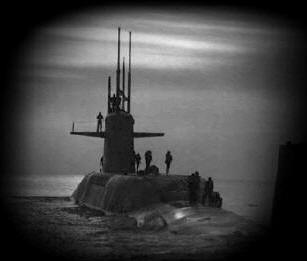
USS
Kamehameha SSBN-642 (Poseidon
Missile Nuclear Submarine), she was a
Fleet
Ballistic Missile Submarine just arriving in
Portsmouth, New Hampshire for Overhaul. I chose this of course due to
the location near my home town (Manchester, NH) and the chance to attend some college.
During my stay In the shipyard I attended many more, even deeper
level, schooling on the same
equipment as the Basic "C" schools
covered. This time we covered just the one piece of equipment
TO A MORE DETAILED LEVEL. Each school was one to three weeks long and
8-9 hour days. The level
of knowledge went into more detailed study of all data and timing signal
flow, all power supply circuits and detailed programming instructions. For each
digital signal, we learned
it, labeled it, followed it through
each circuit card and learned how to
identify by troubleshooting when it was failing. A list of some of the
advanced maintenance schools I can remember are:
Central Navigation Computer
Magnetic tape unit data storage
Parallel to Parallel Converter
Serial to Parallel converter
Navigation Control Panel
LORAN Navigation equipment
SATNAV equipment
GPS receivers (military versions)
Radar Unit (2 separate schools)
BPS-15 Radar and the SPA-25 Display
Early Warning Receiver (radar receiver and analyzer to
detect and identify the enemies radar signal)
IFF Transponder (Identify Friend or
Fo system)
In 1987 I Joined the crew of the USS Daniel Webster SSBN-626 GOLD
For a three month (105 days) long Deterrent Patrolout of Holly Lock Scotland.
This was temporary duty and I was to returned to the Kamehameha after the
patrol. There I earned my Submarine Qualification Dolphins. I learned and qualified
to stand many watch stations. I was trained and designated system
expert on the ships RADAR and Electronic Surveillance Systems.
I later attended three very detailed advanced schools on this equipment as
well. We enjoyed some liberty in Naples Italy for a show of power during A
socialist rally (where we arrived through the Straights of Gibraltar and
through the highly trafficked Mediterranean Sea UNDETECTED)
In 1991, after five years with the Kamehameha I was reassigned to shore
duty at the
Naval Submarine Support Facility (NSSF), New London, Conn. There
I was assigned to the Navigation Electronics repair division. Our job
was to make repairs that where above the level of technicians aboard the
boats (various fast attack SSN submarines). I attended more schools of
coarse. For instance the BRD-7 was a high tech communications
intercept system (it's job was to scan and listen for enemy
communications and give detailed signal information and direction finding). I
finished that school in first place out of seven. For this I was
rewarded with a nine month relocation to the Nuclear Repair Division (since
I was still considered the new guy, they volunteered me). There I became all too
familiar with the job of a mechanic and with nuclear energy and
radioactivity. I guess I can brag that I have been inside the
Reactor Compartment in a canary suit and touched the nuclear reactor
itself...ooooooooooo
I took some core classes in College (History, Literature,
Psychology etc...)
while in New London to put towards my AS degree.
In 1993 After a long stay with much experience under my
belt I decided to take the large cash offer from the Navy, to leave the service as
part of their force reduction program after the cold war was over.
I departed for Fort Lauderdale, Florida to join my parents at a small CB shop
and repair department.


 Chat
Chat